Black Friday — 20% off the SubScap Release Tool
Ends November 30, 2026 · Use code BLACKFRIDAY20
Shop the deal
The science of the subscap
Meet the muscle no one can reach.
The subscapularis is the most powerful — and most neglected — of the four rotator cuff muscles. It hides beneath your shoulder blade, governs how your arm rotates inward, and is the silent driver behind a surprising amount of shoulder pain. Here’s what it is, what goes wrong, and why releasing it changes everything.
Rotator cuff
anterior stabilizer
01 — Anatomy
What is the subscapularis?
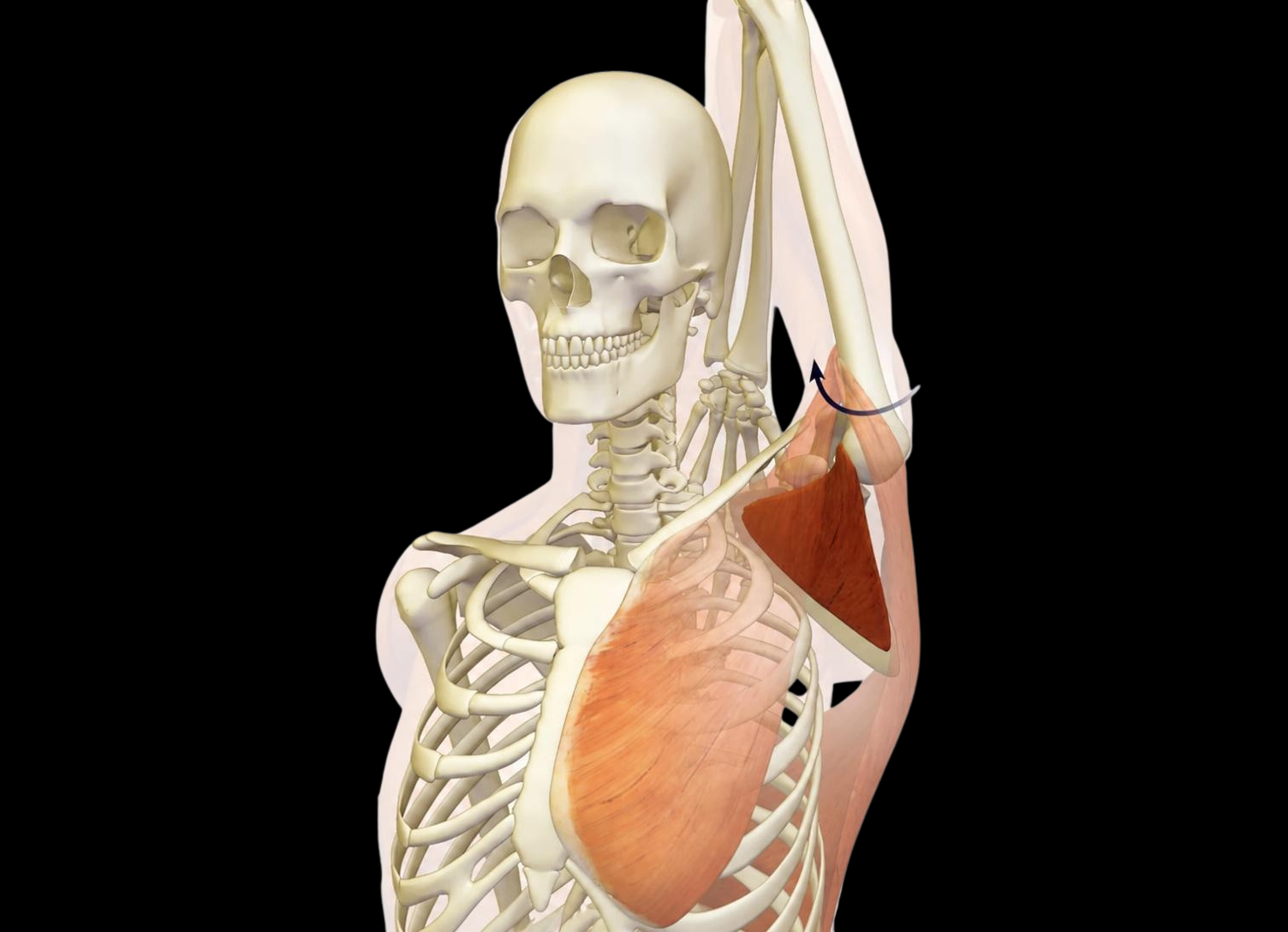
The subscapularis is a large, triangular muscle that fills the subscapular fossa — the concave front surface of your shoulder blade. It is the biggest and strongest of the four rotator cuff muscles (supraspinatus, infraspinatus, teres minor, and subscapularis), and the only one on the anterior, or front, side of the scapula. Its tendon passes across the front of the shoulder joint to attach on the lesser tubercle of the humerus, making it the primary internal rotator of the arm.
Origin
Subscapular fossa of the scapula (shoulder blade)
Insertion
Lesser tubercle of the humerus
Innervation
Upper & lower subscapular nerves (C5–C6)
Action
Internal rotation of the arm; shoulder joint stability
02 — Function
What it actually does
The subscapularis does two jobs at once: it moves the arm and it holds the shoulder together. When it works well, the joint feels effortless. When it doesn’t, every overhead and behind-the-back motion pays the price.
Internal rotation
The subscapularis is the primary internal rotator of the shoulder. Every time you reach behind your back, throw, or pull, this muscle fires.
Joint stability
As the largest of the four rotator cuff muscles, it acts as the anterior (front) stabilizer of the glenohumeral joint, keeping the humeral head centered in its socket.
Force coupling
It works in concert with the other rotator cuff muscles to compress and center the joint during movement — a delicate balance that, when disrupted, drives dysfunction.
03 — Dysfunction
What goes wrong
Because the subscapularis works on every press, throw, and pull, it accumulates load faster than it recovers. The result is a cascade of dysfunction — from stubborn trigger points all the way to structural tears.
Trigger points & adhesions
Repetitive overload causes taut bands and localized knots within the muscle belly. These trigger points refer pain and restrict range of motion, and they rarely release on their own.
Tendinopathy
Chronic friction and poor mechanics can irritate the subscapularis tendon at its insertion, producing deep anterior shoulder pain that worsens with overhead or behind-the-back movement.
Inhibition & weakness
A tight, guarded subscapularis often becomes weak and under-recruited. This imbalance shifts load onto smaller muscles and accelerates wear across the shoulder complex.
Tears
Partial- and full-thickness tears can occur with acute trauma or long-standing degeneration. Tears require clinical diagnosis and, in many cases, surgical management.
A clinical note: This guide is educational, not a diagnosis. Persistent shoulder pain, weakness, or instability should be evaluated by a qualified clinician — especially before assuming a subscap issue is purely muscular.
04 — Symptoms
Signs your subscap is involved
Subscapular dysfunction rarely announces itself. It shows up as a cluster of subtle clues — any of which is worth paying attention to.
Deep, aching pain in the front of the shoulder or armpit
Pain that worsens when reaching behind the back (tucking a shirt, bra-fastening)
Restricted internal rotation — the arm won’t rotate inward freely
Weakness or “dead arm” feeling during throwing or pressing
Referred discomfort down the back of the arm or into the shoulder blade
Clicking, catching, or a sense of instability in the joint

Axillary
access corridor
05 — The problem
Why it’s so hard to reach
It sits underneath the scapula
The subscapularis lies on the anterior surface of the shoulder blade, pressed against the rib cage. It is buried — not a muscle you can easily palpate from the surface.
The axillary corridor is narrow
The only practical access runs through the armpit, a tight channel of nerves, vessels, and lymph nodes. Broad tools simply cannot navigate it safely or precisely.
Foam rollers are the wrong shape
A roller is wide and round — built for large, flat surfaces like the quads or thoracic spine. It glides over the subscapularis without ever reaching the fossa beneath.
06 — The solution
How sustained release helps
Myofascial release works on a simple principle: sustained, specific pressure into a tight tissue signals the nervous system to let go. It is not about crushing the muscle — it is about holding long enough for the guarding reflex to quiet and the tissue to soften.
Specific pressure
A narrow contact reaches the subscapular fossa directly — the one place broad tools cannot go.
Sustained load
Holding 2–4 minutes per area gives the autonomic nervous system time to down-regulate the guarding reflex.
Breath & patience
Slow exhales increase tolerance and signal safety, letting adhesions release without forcing.
Ready to put it into practice?
The SubScap Release Tool was built around exactly this anatomy. See how it works.
Knowledge is the first release.
Now that you know what the subscapularis is and why it matters, the next step is reaching it. The SubScap Release Tool is shaped to do exactly that.